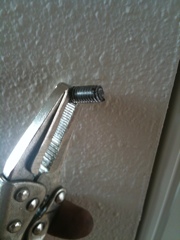
Did you break it using the vise-grip pliers shown (if so, you deserved to get it broken!), or did you twist it off using the specification tool (8mm allen wrench). If you used the proper tool and it broke, then it must have been defective material.
If a screw has been in place for some time and possibly rusted or otherwise corroded in place, first apply some WD-40; hit the head of the screw lightly but firmly as if driving it into whatever it is screwed into; let “soak” for overnight or so; gently but firmly put pressure on the (proper!) tool screw it IN, then same gently but firm pressure to unscrew it — don’t try to hurry this process, as it may take several iterations of this procedure to finally break the hold [NOT THE SCREW!!] that has developed between the screw and whatever it is screwed into.
 blief
blief 
Did you break it using the vise-grip pliers shown (if so, you deserved to get it broken!), or did you twist it off using the specification tool (8mm allen wrench). If you used the proper tool and it broke, then it must have been defective material.
If a screw has been in place for some time and possibly rusted or otherwise corroded in place, first apply some WD-40; hit the head of the screw lightly but firmly as if driving it into whatever it is screwed into; let “soak” for overnight or so; gently but firmly put pressure on the (proper!) tool screw it IN, then same gently but firm pressure to unscrew it — don’t try to hurry this process, as it may take several iterations of this procedure to finally break the hold [NOT THE SCREW!!] that has developed between the screw and whatever it is screwed into.
Better luck next time! GpaZ
LikeLike
Edit my comment:
5th line in second para Should read: … tool to screw …
and,
(Same line, same para): … then the same gentle but firm …
[Sorry for the poor original! GpaZ]
LikeLike